ch
ch English
·At the beginning of 2020, with the large-scale outbreak of the epidemic worldwide, various industries were plunged into a state of decline, including the semiconductor industry, which was covered with a deeply oppressive gray veil.
·Gartner released its 2019 global semiconductor company revenue ranking in January, with Intel, Samsung, and SK Hynix ranking in the top three. In 2019, global semiconductor revenue totaled $418.3 billion, a year-on-year decrease of 11.9%.
February
·There is still huge development space in the domestic semiconductor market, and the market is generally optimistic about SMIC and Huahong Semiconductor. These two semiconductor companies have become domestic industry leaders after years of development. How to enhance China's semiconductor manufacturing and "de Americanization" has become an urgent problem that China needs to solve.
·The COVID-19 broke out on a large scale in Japan and South Korea, which are key regions of semiconductor manufacturing industry. Both Samsung and SK Hynix have confirmed cases of employee infections, but they have not had a significant impact on their production lines.
March
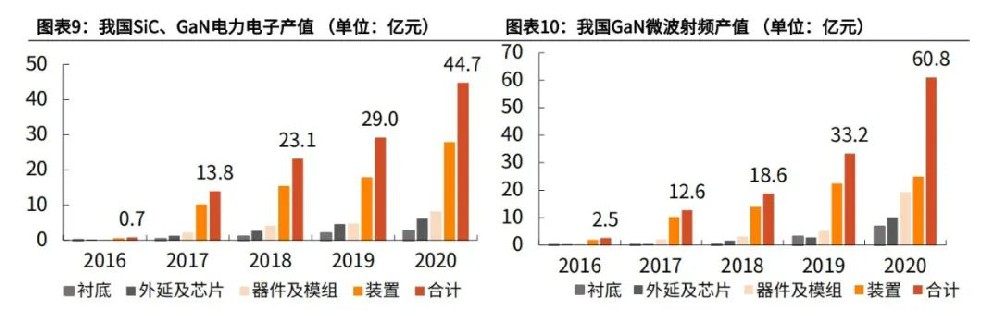
·With the construction of new infrastructure such as 5G in our country, it has promoted a huge improvement in 5G chip technology and production capacity. Therefore, the third-generation semiconductor has received unprecedented attention as a key component. The third generation semiconductor materials can meet the new requirements of high temperature, high power, high voltage, high frequency, and radiation resistance in modern society, and have economic and environmental benefits such as small size, low pollution, and low operating losses. Therefore, the third generation semiconductor materials are gradually becoming the focus of development.
·Chip based semiconductors have made significant innovative breakthroughs in the field of third-generation semiconductor materials such as gallium nitride, which can be used for the preparation of electronic power devices and microwave RF devices.
April
·The domestic semiconductor manufacturing industry is gradually recovering its production capacity comprehensively, and the industry is gradually ushering in a dawn.
·Several semiconductor companies have disclosed their first quarter reports, showing an increase in operating revenue. According to the research report of Fangzheng Securities, the semiconductor industry is divided into three major tiers based on factors such as technological level in segmented fields, global competitiveness, and localization progress:
First tier: target materials, packaging substrates, CMP polishing materials, wet electronic chemicals, and some packaging materials.
Second tier: silicon wafers, electronic gases, compound semiconductors, masks.
Third gradient: photoresist.
May
·SMIC has obtained two national level investment funds, the National Integrated Circuit Fund II and the Shanghai Integrated Circuit Fund II, respectively, injecting $1.5 billion and $750 million into SMIC, with a total amount equivalent to approximately RMB 16 billion. These funds will be used for SMIC Southern's mass production in domestic companies with 14nm and below.
·Huawei HiSilicon's sales increased by 54% year-on-year, an increase of $935 million from the previous quarter, reaching $2.67 billion. Therefore, Huawei HiSilicon entered the global semiconductor TOP10 list for the first time.
·TSMC plans to invest $12 billion to build a chip factory in Arizona, USA. The factory will create 1600 jobs and produce the most precise 5-nanometer chips.
June
·TSMC announced that it will begin trial production of 3nm process chips in 2021 and plans to start mass production in 2022. It will increase research and development investment and purchase two advanced EUV lithography machines to accelerate the development of 2nm process chips.
July
·India has decided to remove Huawei from its 5G network construction plan. In the same month, the UK officially announced its decision to stop using Huawei equipment in 5G construction.
·Nvidia's stock price rose, with a total market value of approximately $251.314 billion, surpassing Intel for the first time to become the highest valued chip company in the United States.
·American analog chip giant ADI has successfully acquired its competitor Maxim.
·SMIC was listed on the Science and Technology Innovation Board of the Shanghai Stock Exchange on July 16th! The issuance price is 27.46 yuan/share, the opening price is 95 yuan/share, the total share capital is 7.13642 billion shares, the P/E ratio is 109.25 times, and the initial public offering has surged by more than 246%.
August
·The country has issued several policies to promote the high-quality development of the integrated circuit industry and software industry in the new era. This policy proposes the formulation and implementation of eight policy measures to encourage the development of the integrated circuit industry and software industry, including finance and taxation, investment and financing, research and development, import and export, talent, intellectual property, market application, and international cooperation.
·At the China Information Technology Hundred People's Congress, Huawei Consumer Business CEO Yu Chengdong stated that the production of Huawei Kirin chips will stop on September 15th.
·SMIC 14nm has entered the mass production stage, and the yield is steadily increasing.
·At the end of August, Japanese Prime Minister Shinzo Abe resigned due to health reasons, which had a significant impact on Japan's semiconductor industry during his tenure.
September
·TSMC will collaborate with six universities in Taiwan to establish the "TSMC Semiconductor Program".
·Nvidia released the RTX 30 series graphics card earlier this month. In the same month, Nvidia acquired ARM (excluding the IoT services division) from SoftBank for $40 billion (approximately 273.3 billion yuan).
·The United States is about to remove Huawei and ZTE equipment, and the FCC has stated that it is expected to cost $1.837 billion to remove or replace Huawei and ZTE equipment.
October
·The first chip university in China, Nanjing Integrated Circuit University, was officially established. It is a special "school" established by the government, mainly recruiting Chinese youth with employment needs in their senior and junior years, with the aim of cultivating professional integrated circuit talents in China.
·Meng Wei, spokesperson for the National Development and Reform Commission, responded to chip unfinished projects at a regular press conference, saying, "In some places, the understanding of the laws of integrated circuit development is insufficient, and projects are blindly launched. The risk of low-level redundant construction is evident, and even some projects are stalled and factory buildings are vacant, resulting in resource waste
·The Huawei Mate40 has been officially released, which is Huawei's first model equipped with a 5nm process chip called the "Kirin 9000".
·Semiconductor giant AMD has officially announced that it has reached a final agreement with FPGA chip leader Xilinx to acquire the company through AMD's issuance of $35 billion worth of stock.
November
·Biden won the US presidential election, while Trump failed to win re-election. Prior to this, the Trump administration had launched a fierce crackdown on China's semiconductor industry, which resulted in semiconductor manufacturer TSMC being unable to manufacture advanced chips for Huawei HiSilicon.
·Huawei officially sells Honor for 100 billion yuan.
·Intel announced the acquisition of San Francisco based startup SigOpt, whose main business is creating optimization platforms for modeling and simulation. It is reported that the technology developed by this company will help promote the development of Intel's lAI chip business.
December
·The US Department of Commerce will include 59 Chinese enterprises, including China's largest chip manufacturer SMIC, in the "Entity List" for export control to the United States. SMIC responded that the regulation has no significant adverse impact on the company's short-term operations and financial condition, but has a significant adverse impact on the research and development of advanced processes and capacity construction of 10nm and below.
·There are currently about 244000 chip related companies in China. More than 85% of related enterprises are distributed in the information transmission, software and information technology services industry, wholesale and retail industry, and scientific research and technology services industry. More than 20000 chip related companies have patents.